The No-Rush Slow Living Guide to a Clutter-Free Home
homedude is reader-supported. When you buy through links on our site, We may earn an affiliate commission. Learn more
Skip the Purge, Keep the Peace: Master the Art of Gentle Decluttering That Actually Works
Life gets overwhelming fast when we’re always rushing to keep up. I’ve found that slow living is about making intentional choices with our time and energy, focusing on what really matters. This mindful approach helps us step back from the chaos and find more balance in daily life.
When it comes to our homes, the slow life mindset can totally change how we deal with clutter and organization. Instead of feeling like we have to declutter everything in one weekend, we can try a gentler, more lasting approach. Rushing through the process just leads to decision fatigue—and stuff ends up back where it started anyway.
So, here’s a different way to get that calm, organized space you want. We’ll look at how to declutter at your own pace, make the process easier on your mind, and actually keep that peaceful vibe in every room.
What Is Slow Decluttering?
Slow decluttering means clearing out items little by little instead of all at once. This way, you make smarter choices about what stays, and you start building habits that stick.
The Difference Between Minimalism and Mindful Decluttering
A lot of people think decluttering equals minimalism, but honestly, they’re not the same.
Minimalism is about owning as little as possible—just the bare essentials. It’s a lifestyle built around only what you absolutely need.
Mindful decluttering is more about being thoughtful with your choices. You don’t have to own just 20 things to do this well.
When I’m decluttering mindfully, I ask myself:
- Do I actually use this?
- Does it make me happy?
- Is there space for it?
Simple living sits somewhere in the middle. You keep what works for your life, but you don’t go to extremes.
The goal isn’t owning the least stuff. It’s having the right stuff for your life, whatever that looks like for you.
Why “Slow” Works Better Than a Weekend Purge
I used to think I could clear out my whole house in a weekend. Spoiler: that never worked.
Weekend purges usually flop because:
- You get tired and make bad choices
- You feel rushed and stressed out
- You can’t keep up the results
Slow decluttering just works better. When I’m not rushing, I make smarter decisions. I can really think about whether I need something.
Plus, you build good habits over time. When I declutter just one drawer a week, I start to see what causes the clutter in the first place.
And honestly, it fits real life. I don’t have to block out a whole weekend. Ten minutes before bed to organize my nightstand is enough.
Consistency is the real trick. Doing a bit each day adds up faster than you’d expect.
Step-by-Step: How to Declutter at a Slower Pace
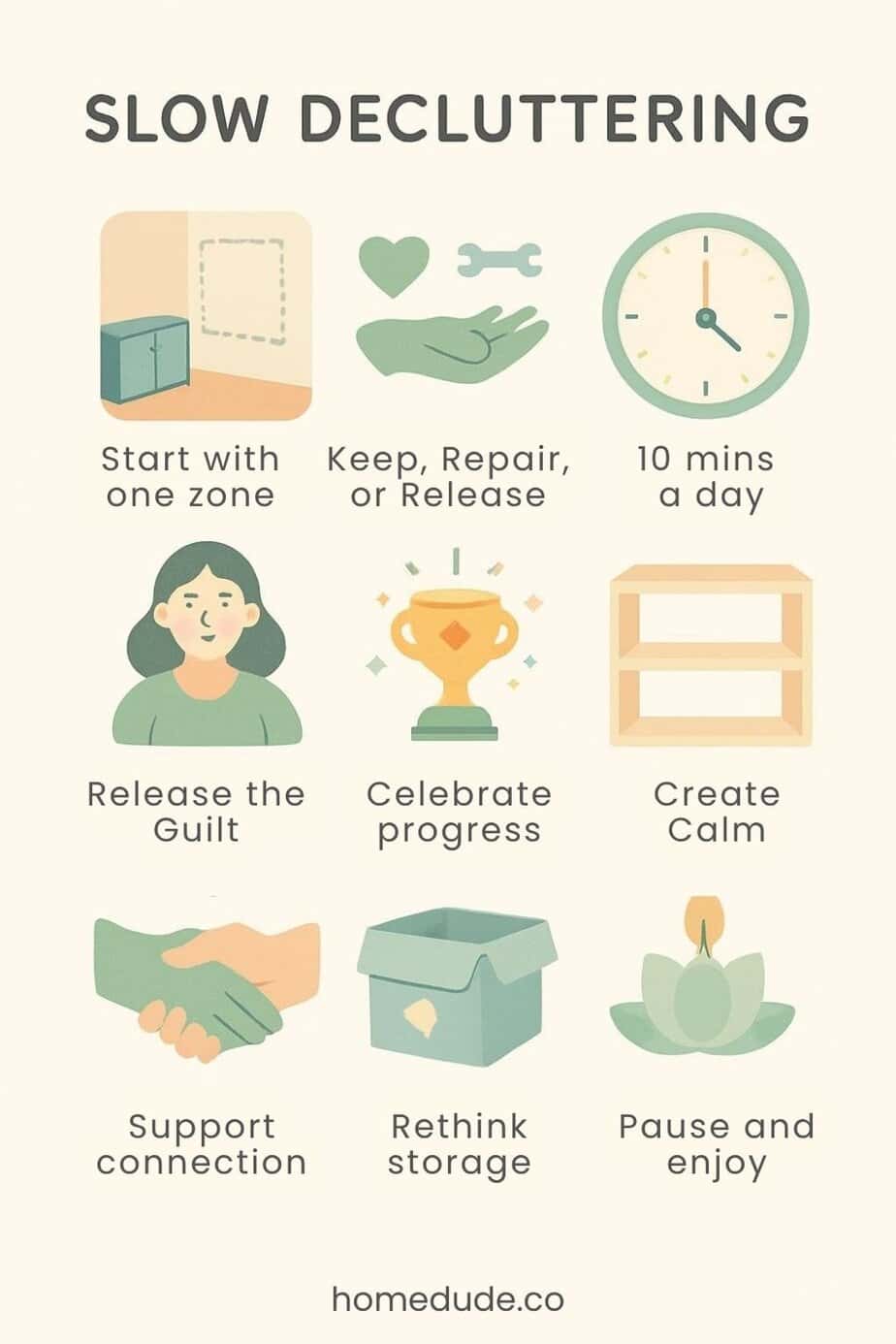
The key to slow decluttering is breaking everything down into super small, manageable pieces. I pick one tiny area at a time and use a simple sorting method that takes the guesswork out of tough decisions.
1. Start With One Zone — Not the Whole House
I always pick the smallest area I can think of. Sometimes that’s just a single drawer, one shelf, or even the top of my nightstand.
Why small zones are better:
- Way less overwhelming
- Quick wins help you keep going
- You can finish in one go
- No mess spills into other rooms
I pick zones based on what bugs me most right now. If my kitchen counter makes me crazy, that’s where I start. Can’t find anything in my desk drawer? That’s my project.
Easy starter zones:
- One bathroom drawer
- Coffee table surface
- Car glove box
- Single bookshelf
- Purse or wallet
I always finish one zone before moving on. No jumping around until that spot feels totally done.
2. Use the “Keep, Repair, Release” Method
I use just three categories for every item I touch. This keeps things simple and helps me avoid decision paralysis.
Keep: Stuff I use and love. It goes right back where it belongs.
Repair: Items that need fixing or cleaning. I set these aside with a plan to deal with them in the next two weeks.
Release: Things I’m ready to let go of—donate, sell, or toss. These go in a box and leave my home within a few days.
I only handle each item once. No “maybe” piles or moving stuff around five times. The three-category system forces clear choices and keeps me from getting stuck.
3. Set a Realistic Rhythm (10 Minutes a Day Rule)
I stick to just 10 minutes of decluttering each day instead of marathon sessions. Even on my busiest days, that’s doable.
Here’s my daily 10-minute routine:
- Set a timer
- Pick one small zone
- Sort everything into my three categories
- Stop when the timer rings
Some days I keep going past 10 minutes. Other days, I stop right on time. Both are totally fine.
I jot down my progress in a notebook. Seeing what I’ve done keeps me motivated. Slowing down like this keeps me from burning out or losing steam.
Mindset Shifts That Make Decluttering Easier
Decluttering gets easier when I change how I think about my stuff and my space. The right mindset helps me make room to actually live, let go of guilt, and celebrate small wins instead of chasing perfection.
1. Focus on Space for Living, Not Empty Surfaces
I’ve started seeing empty space as room for experiences, not just bare surfaces that need filling. This one shift changed how I look at my whole home.
When I clear a table, I picture family dinners or game nights there. When I organize my closet, I imagine stress-free mornings picking out clothes.
Space gives me freedom to:
- Move around easily
- Find stuff fast
- Invite friends over without scrambling
- Actually relax at home
I try to notice how clutter makes me feel tense and then imagine the relief when that space is open again.
My nightstand doesn’t need a bunch of decorations. I just want space for my book, a water glass, and to sleep in peace. That mindset keeps only what really serves my daily life.
2. Letting Go of Guilt and Decision Fatigue
I used to feel guilty about tossing gifts or things I spent money on. But honestly, keeping stuff out of guilt just stresses me out more.
Decision fatigue is real. To help, I made a few simple rules:
- Haven’t used it in a year? It goes.
- Doesn’t fit my life now? It goes.
- Makes me feel bad to see it? It goes.
My thinking changed when I realized someone else might need what I’m just storing. Donating feels way better than letting things gather dust.
I try to stay present by focusing on one tiny area at a time. Instead of tackling my whole closet, I just start with a single drawer.
3. How to Celebrate Progress Over Perfection
I used to quit decluttering because my house never looked like the magazines. Now I celebrate every little win, no matter how small.
Progress can be:
- Clearing one shelf
- Donating a bag of clothes
- Keeping my kitchen counter clean for a few days
- Finding something I need without digging
I snap before and after photos of small spaces. Seeing the difference keeps me going, even if the rest of the house is still a mess.
Noticing how good it feels to finish a tiny decluttering task gives me energy for the next one. Each cleared drawer is a victory.
I remind myself that decluttering never really ends. It’s not a one-and-done thing, and that’s okay. The process can actually be kind of enjoyable if I let it.
Slow Decluttering Tips for Every Room
Every room needs its own approach. I focus on just one small spot at a time—like a shelf or a drawer—so I don’t get overwhelmed.
Kitchen: Reduce Duplicates and Rethink Storage

I always start kitchen decluttering by hunting for duplicates. Most of us have extra can openers, spatulas, and mixing bowls we never use.
I open one drawer at a time, pull everything out, and ask myself when I last used it.
Start with these:
- Mugs and water bottles
- Kitchen gadgets you barely touch
- Expired spices and condiments
- Duplicate utensils
I keep only what I actually cook with. That pasta maker collecting dust? Someone else can use it.
When it comes to storage, I pick containers that stack well and fit what I really have. I don’t buy organizers until I know what’s staying.
The “one in, one out” rule is a lifesaver. If I buy a new mug, I donate an old one.
Bedroom: Create Calm Through Intentional Decor
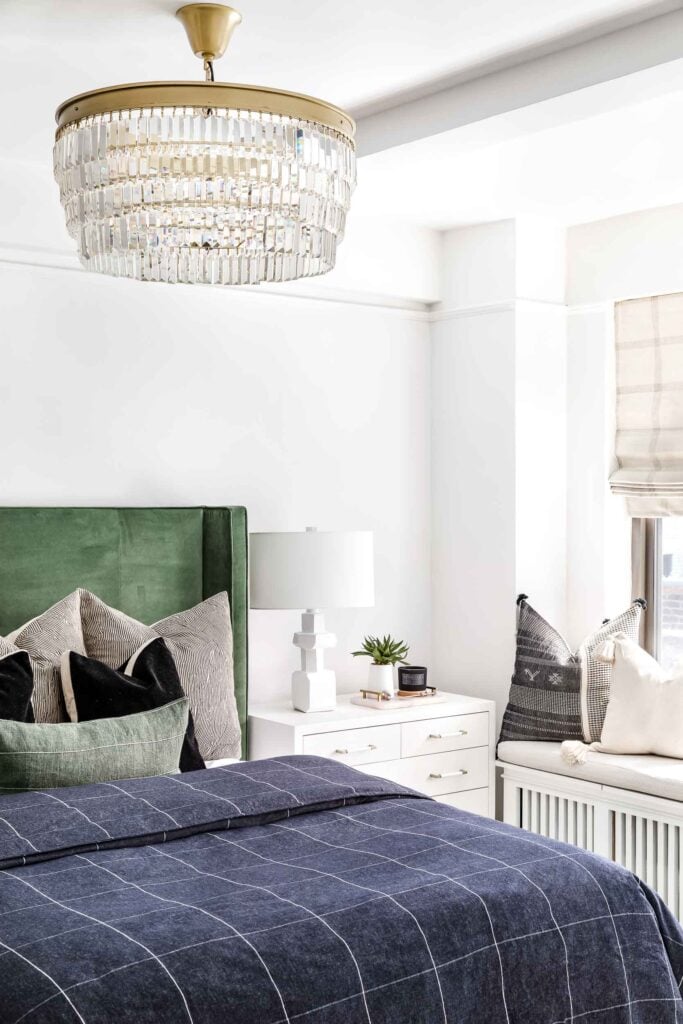
My bedroom should feel peaceful, not cluttered. I always start with surfaces—nightstands, dressers, and under the bed.
I remove everything from my nightstand except what I use every day. Usually, that’s just a lamp, a book, and a water glass.
Simple bedroom steps:
- Clear all surfaces
- Pick 3-5 things that actually matter
- Put the rest away in drawers or somewhere else
For clothes, I do one category at a time. Monday is t-shirts, Tuesday is pants, and so on.
If a piece doesn’t make me feel good, it goes in the donation box. Surrounding myself with things that support rest and peace just feels better.
Living Room: Keep What Supports Connection

I think about how my family actually uses this space. We need comfy seating, decent lighting for reading, and surfaces for drinks or games.
The rest is just clutter, honestly.
I start with coffee tables and side tables since they collect random stuff fast.
My living room must-haves:
- Comfy seating
- Storage for things we really use here
- Decor that makes us happy
- Space to move around
I keep decorative items to a minimum—just the ones that mean something. Three special photos beat a dozen random ones any day.
Books get sorted too. Favorites and current reads stay; the rest go elsewhere or get donated.
Remote controls, chargers, and magazines all need a home. I use a small basket to keep these everyday things corralled.
Maintaining a Clutter-Free, Calm Home
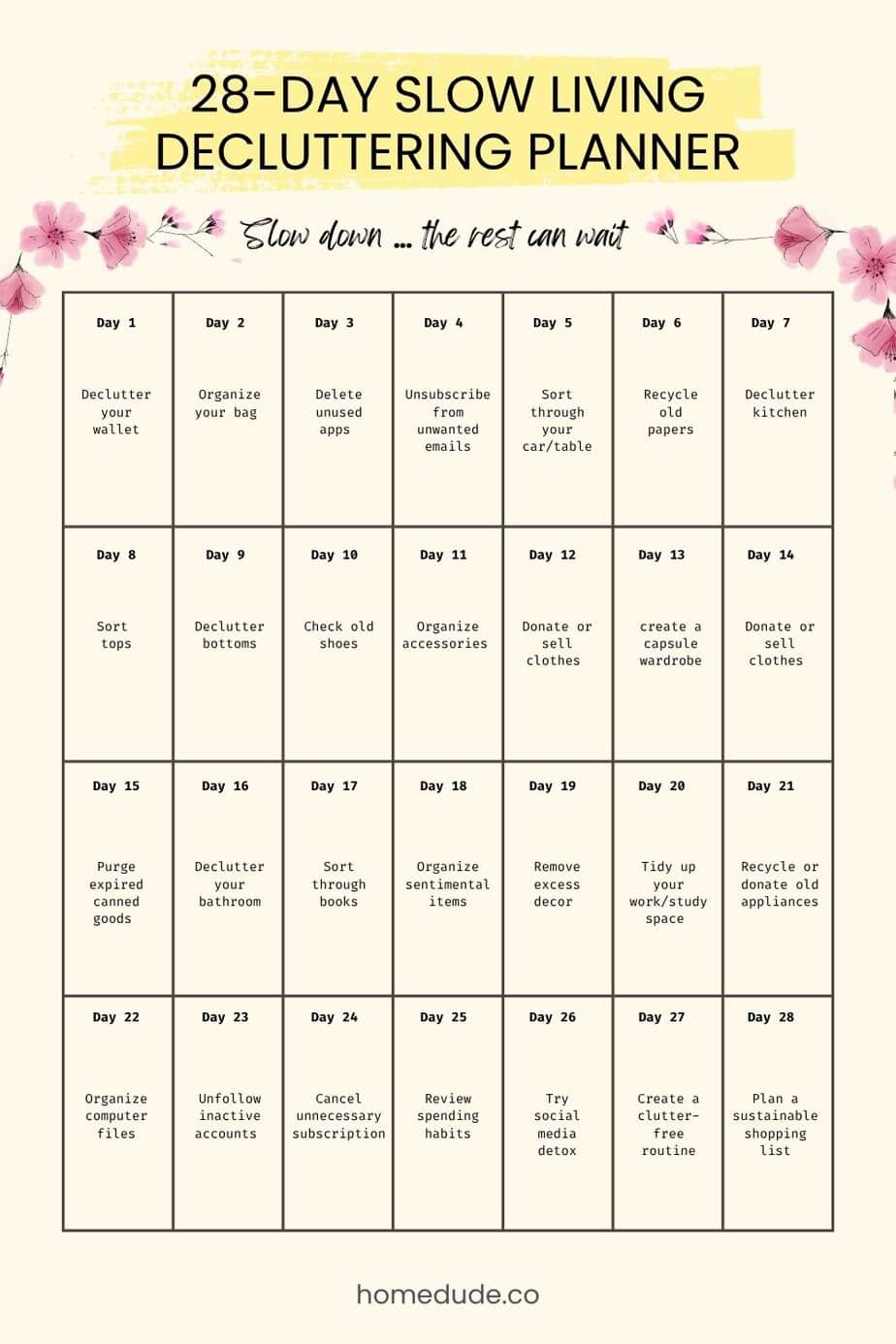
Honestly, I’ve found that keeping a peaceful home isn’t about some massive clean-out spree. It’s those small daily habits that stop chaos before it even starts. (Get our 28-day decluttering plan below.)
Build Tidy-Up Rituals Into Your Day
Each morning, I make my bed. It takes maybe two minutes, but it sets a calm vibe for my whole day.
My evenings? I do a quick 10-minute pickup walk. I wander from room to room, grabbing stray stuff and putting it back where it belongs.
Dishes get loaded into the dishwasher. Books head back to shelves. Clothes? Straight into the hamper.
Daily tidy-up schedule:
- Morning: Make bed, clear nightstand
- After meals: Wash dishes right away
- Evening: 10-minute pickup walk
- Before bed: Set out tomorrow’s clothes
I’ve stashed small baskets in busy spots around the house. When I spot random things, I toss them in the basket until I have a minute to put them away for real.
These actions are just automatic now. I don’t really think about them—it’s like brushing my teeth. They just happen.
How to Prevent “Re-Clutter” From Creeping Back
I stick to the “one in, one out” rule. If I buy something new, something old has to leave.
My declutter boundaries:
- Nothing on countertops except what I use every day
- Surfaces get cleared before bed
- Mail gets sorted right away—keep, file, or toss
- I review seasonal stuff twice a year
I’ve gotten in the habit of questioning every purchase. Do I really need this? Where will it actually live? Am I going to use it, or is it just another thing?
Everything has a home. My keys always land on the hook by the door. My phone charges in the same spot every night.
When friends offer hand-me-downs, I try to be honest with myself about what I actually need. Sometimes saying no is the best way to protect my peaceful vibe at home.
Once a month, I set a timer for 15 minutes and do a fast declutter. I grab a donation bag and walk through the house, pulling out anything that doesn’t serve me anymore.
When to Pause — And Enjoy the Space You’ve Created
I try to actually appreciate my calm environment. Every morning, I sit with my coffee and notice how peaceful my space feels.
There’s a cozy reading corner where I can escape. I keep it uncluttered because, honestly, it’s my sanctuary.
When friends come over, I watch their shoulders drop as they walk in. It’s a small thing, but it tells me my efforts are paying off.
In the evenings, I light candles and just breathe in my tidy space. These quiet moments remind me why I keep boundaries around clutter.
My home supports my well-being now. That’s worth every bit of daily effort, even on days when it feels like a hassle.
Make a copy of our “Slow Living decluttering plan” to gently organize your life with love and intention.
Related Posts